The iPhone 11 has two 12MP lenses, wide-angle and a 120° field-of-view ultra-wide, the Pro and Pro Max add in a new telephoto lens to the mix.
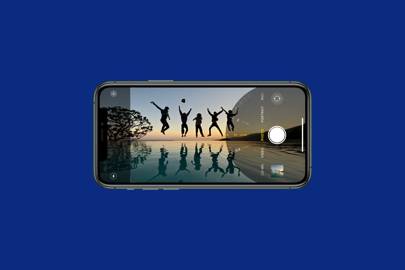
The clever camera app UI sees the black borders either side of the preview camera image dissolve away to suggest the shot composition for the ultra-wide lens
While the iPhone 11 has two 12MP lenses, wide-angle and a 120° field-of-view ultra-wide, the Pro and Pro Max add in a new telephoto lens to the mix. The wide-angle lens has an f/1.8 aperture, the ultra-wide a f/2.4 aperture and the telephoto an f/2.0 aperture. See! We've lost you already. What do you care about f-stops?! You just want to point the damn phone at something and have machine learning take over and create a masterpiece with no effort on your part.
To its credit Apple is trying to do just this for you, while you sit back and take the credit. Let's cut to the chase and say right now that this Pro set-up is by far the best camera we've seen in a iPhone yet, and the 11 in general is a noticeable and satisfying step up from the previous generation in this department, which is a welcome change from recent iPhone launches.
There are a few zoom options: the normal 1x view, the 0.5x zoom out from the ultra-wide lens (both of these are also on the 11) and the Pro-only 2x zoom courtesy of that telephoto lens. The front camera gets a bump from seven to 12MP, and now has a wide-angle option as well.
All the new iPhones get the new Night Mode, and this is where Apple's phone takes the reins and flatters your compositional skills. Night mode kicks in automatically, taking longer exposures, so you don't have to think about it further than obeying the on-screen instructions that tell you how long you have to hold the phone steady to capture a very impressive low-light shot.
What's more, if the phone senses it is super stable, set down on a table or on a tripod even, the options to lengthen the exposure kick in and it's possible to get vivid, detailed night sky or trippy traffic light-trail images, for example. Compare low-light images on an old iPhone with these new ones and the contrast is stark. It's, well, night and day.
The extra camera lens combined with some nifty image processing from the new on-board A13 Bionic chip does result in the Pros delivering ever so slightly better night and portrait images than the standard iPhone 11. And this is without the imminent Deep Fusion feature, which takes shots from both before and after you press the shutter button to stitch together the best image it can.
We gave the new Max Pro to one of our professional photographers to try out for a couple of days. He gave the three-lens array in general the thumbs up, saying: "I was most impressed with the longer lens for taking portraits. I always wished I had one of those on my iPhone."
However, our snapper did highlight some limitations of the system: "The key difference between this and a pro camera is the size of the sensor is tiny, so you have no control over depth of field, which is why they have to implement it digitally. The bigger the sensor the more control you have over which parts of the image are out of focus and which are out of focus. Also, only jpeg files come out of the Camera app so there is no flexibility in recovering highlights or shadows or correcting colour. Don't get me wrong, this is great but not professional standard."
One last point deserving a mention here is the clever camera app UI where taking video or changing options and settings with a swipe of the thumb is much more intuitive than it has any right to be. And one of the best parts is where the black borders either side of the preview camera image dissolve away to transparent to surreptitiously suggest the shot composition if you switched to ultra-wide.