Performance – Speed isn’t a problem for the iPhone 11
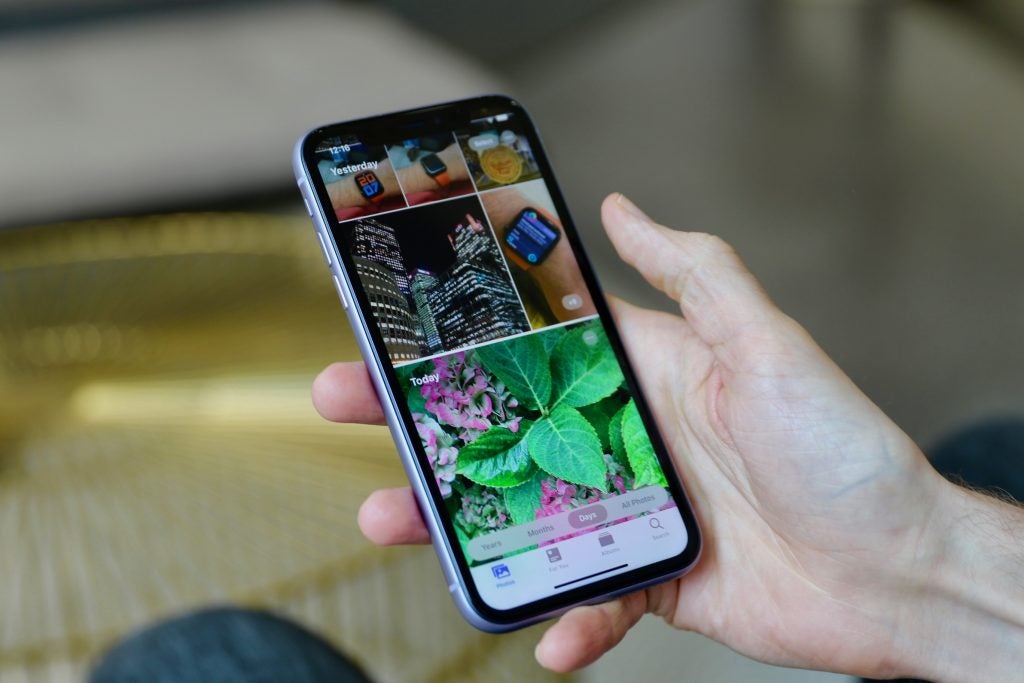
Inside the iPhone 11 you’ll find Apple’s A13 Bionic chipset and, according to the Geekbench benchmarking app, 4GB RAM. This is a seriously fast piece of silicone that outperforms every Android phone we’ve reviewed in benchmarks, and it feels equally as snappy in general day-to-day use.
Yet, I am not sure anyone coming from an iPhone 8, iPhone X or XS will notice the differences right away. Swiping around iOS is smooth, apps open instantly and you’ll never be left waiting for something to load – and I would have said the exact same thing when I unboxed and started using any previous iPhone.
Where the difference will likely make themselves apparent is a few years down the line. I am confident in saying this will be a fast phone in two or three years time, and that’s really what sets iPhones apart. I didn’t suffer any poor performance while gaming, nor was there any slowdown in the camera app.
The iPhone 11 has some fancy new audio tricks, designed to try and make the noise coming from the phone feel a bit less like it’s just coming from either end and more like it’s coming from all around the device. The ‘spatial’ audio supports common formats like Dolby 5.1 (if you’re watching from Netflix) and Atmos (iTunes) and while it’s a nice improvement over the XR it’s far from true ‘surround sound’.
Related: What Is Dolby Atmos?
Apple also said the FaceID sensor that unlocks the phone is faster this time and works at more acute angles. Speed has never been an issue for FaceID and it remains snappy, though judging it next to an iPhone XS Max doesn’t show a huge increase in speeds. In terms of the angles it can work at, I still have to pick it up from a table to get it to register, so the improvements there feel minimal.
The final piece of the performance jigsaw is a completely new U1 chip. The uses of this seem a little sparse currently, however it does make AirDropping files to other U1 and iOS 13.1 users easier
There’s no 5G support on any of the new iPhones and there’s no dedicated 5G handset from Apple this year. This was heavily rumoured in the run-up to launch and hardly comes as a surprise.
Related: 5G in the UK
Pick the cheapest iPhone 11 and you’ll get 64GB storage, four times less than the 256GB base Galaxy Note 10. If you plan on storing lots of 4K60 video, multiple Apple Arcade games (these seems to be usually about 1GB each) and music, then that will quickly fill up. For an extra £50/$50 you get the 128GB model which represents much better value. There’s a 256GB option, too.