iPhone 11 wireless: No 5G, and what's this U1 chip?
Apple is skipping 5G networking altogether for the iPhone 11, which is a bummer because you'll miss out on the blazing speeds offered by phones like the Galaxy S10 5G, which can go as high as a gigabit per second. 5G networks are still being built out, and the modems that support multiple 5G bands are just now hitting the market. Still, if you want a true future-proof iPhone, you may want to wait for the 2020 iPhone with 5G.
The iPhone 11 supports 4G LTE, which offers decent performance but not the same speeds as the iPhone 11 Pro and 11 Pro Max. Why? Because while the new iPhone has 2x 2 MIMO antennas, the iPhone 11 Pro models offer 4x4 MIMO for better performance.
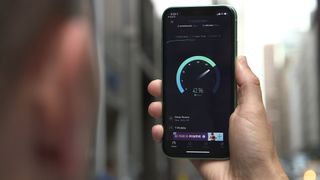
On the Speedtest.net app, the iPhone 11 delivered an average download speed of 13 Mbps over T-Mobile's network in the same location in New Jersey, compared with 15 Mbps for the iPhone 11 Pro Max. Uploads speeds were a similar story, with the iPhone 11 averaging 5.4 Mbps to the iPhone 11 Pro Max's 6.1 Mbps. That's not much of a speed difference.
One unique wireless feature on the iPhone 11 is a new U1 chip for spatial awareness that uses Ultra Wideband technology. With this chip, the iPhone can accurately pinpoint the location of other U1-enabled devices; for now, that just means other iPhone 11 handsets, and the U1 chip initially benefits just AirDrop at this point. Point in the direction of another iPhone 11, you can then share the files more efficiently than you could before.
Rumor has it that Apple has an object tracker in the works to better take advantage of the U1 chip. This would directly challenge keyfinders like the ones made by Tile.