Apple iPhone 11 Pro review: the best camera and screen on a phone
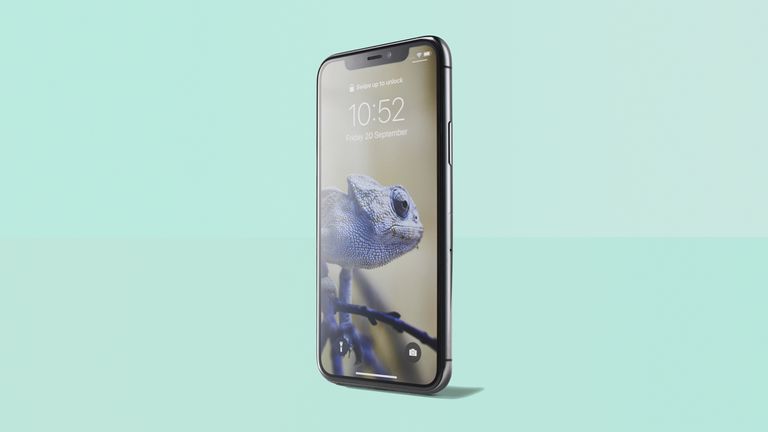
Welcome to T3's iPhone 11 Pro review, where we'll put Apple's new top-of-the-line phone through its paces to find out if it deserves its 'pro' moniker.
Apple made a big deal about the new triple camera system during the phone's announcement, and also highlighted an improved screen and better battery life… but it turns out that this year's upgrades are more comprehensive than you might think.
Of course, the camera is still the standout, and we'll go on a deep dive to show you why. But there's lot more to consider when it comes to the questions of updating from an older model.
APPLE IPHONE 11 PRO REVIEW: PRICE AND AVAILABILITY
The iPhone 11 Pro starts from £1,049, for the 5.8-inch model with 64GB of storage. There's also the iPhone 11 Pro Max, which has a 6.5-inch screen and longer battery life, but is otherwise identical when it comes to specs. That starts from £1,149 for 64GB.
You can upgrade to get more storage space. £150 more gets you 256GB. Another £200 on top of that gets you 512GB. It's a pretty hefty premium in both cases, and Apple still doesn't include a microSD card slot.
These are damn expensive phones, though the £1,000 mark is now not uncommon – the Samsung Galaxy Note10+ comes in at £999, and just like that model, these are Apple's highest-end offerings.
If it's more than you're willing to spend on a phone, it's totally understandable – the
(non-Pro version) starts from £729, with far fewer cut corners than you'd expect.
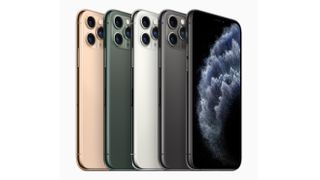
The iPhone 11 Pro is available in four colours: Space Grey (black on all sides), Silver (silver edges and a white back), Gold (warm gold edges with a back that's like a dark peach), and the new Midnight Green (with dark green edges, and kind of moody forest green back).
The latter is apparently wildly popular, which is no surprise for a new colour. It looks lovely – it's really dark, and in dim lighting could be mistaken for black, but it clearly has this rich green tint in all other lights.
APPLE IPHONE 11 PRO REVIEW: DESIGN, SCREEN AND SPEAKERS
The design of the 11 Pro is almost identical to the iPhone XS, including the use of stainless steel on the sides with glass across the back.
A falling phone is still far too unpredictable for us to be able to guarantee that the new model won't break after a fall, but your odds are better, and that's all you can ask for, really.
The only notable changes to the look are on the back: the camera, and the texture on the glass plate.
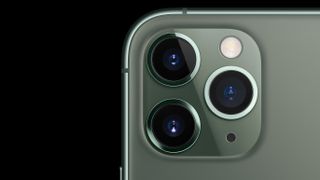
The big triple camera looks far better than it has any right to (though still is not quite a thing of unambiguous beauty). The trick is that it draws from classic design: much like the iPod evoked Braun radios, this is built like triple-lens film cameras such as the Crown8 E3.
The thick ring around each lens on the iPhone leans into this heritage – it makes the camera look practical and important, rather than like Apple has failed to hide it (as can be the case).
I'm not sure it's necessarily better-looking than the central camera arrays on the Samsung S10 or Huawei Mate 30, but I've become quite fond of its physicality.
The entire glass back of the phone now has an etched texture to it, which makes it more reliable to grip without a case. This is extremely welcome, because I learned exactly which surfaces in my home were flat and which weren't by watching the iPhone XS inevitably work its way towards edges and take a tumble.
On the front, there's still a hefty notch that can't help but make the design look a little behind rivals with punch-holes or pop-up cameras, which give you the full screen to view.
In practice, it's not a problem in any way – iOS has been designed around the notch, and Apple's secure (and now faster) Face ID needs chunkier sensors – but it does feel behind the curve, which isn't exactly what you want from a £1k+ phone. Especially when other high-end phones are coming with super-futuristic in-screen fingerprint sensors that work great, which we ultimately prefer to face recognition.
That brings us to the screen, which is our first unqualified rave review for the 11 Pro. Now peaking at 1,200 lumens when viewing HDR photos or video, it's basically like having an OLED telly in your hand.
HDR videos, and especially Dolby Vision, look absolutely incredible. There's no HDR10+ support, but given that this is barely used so far (Amazon Prime Video supports it), while Dolby Vision is on both Netflix and the iTunes Store, we don't mind this omission too much. HDR10+ videos will still fall back to regular HDR10, which is fully supported.
The wide P3 colour gamut makes photos look vibrant and realistic, and everything is pin-sharp. It's utterly, utterly gorgeous.
The iPhone 11 Pro and Pro Max have the same screen density (over 400ppi), but at different resolutions, so there's no difference in sharpness. For movie buffs, there's a strong argument to get the bigger model just to really, really enjoy the display.
Apple has included new 'spatial audio' speakers, with Dolby Atmos support. The effect is really impressive – there's clear separation of left and right, and you can hear nuance in the position of sounds from the front in movies, though you don't exactly get the full rear-speaker experience, unsurprisingly.
Of course, most people will probably use headphones for movies, but the new speaker setup has other advantages: it's super loud, and offers balance and quality that pretty much kills off the need for cheap Bluetooth speakers. It's even better and louder for calls – compared to the iPhone XS, the difference was noticeable from the very first ring tone we heard.