𝟗𝟎𝟎𝟎 𝐒𝐚𝐦𝐬𝐮𝐧𝐠 𝐆𝐚𝐥𝐚𝐱𝐲 𝐒𝟗 𝐠𝐫𝐚𝐭𝐮𝐢𝐭𝐞𝐦𝐞𝐧𝐭 𝐞𝐧 𝐁𝐞𝐥𝐠𝐢𝐪𝐮𝐞! 🇧🇪 𝐍𝐞 𝐦𝐚𝐧𝐪𝐮𝐞𝐳 𝐩𝐚𝐬 𝐥'𝐨𝐜𝐜𝐚𝐬𝐢𝐨𝐧 𝐝'𝐨𝐛𝐭𝐞𝐧𝐢𝐫 𝐮𝐧 𝐬𝐦𝐚𝐫𝐭𝐩𝐡𝐨𝐧𝐞 𝐠𝐫𝐚𝐭𝐮𝐢𝐭𝐞𝐦𝐞𝐧𝐭! 🔥

SAMSUNG S9 REVIEW: CAMERA
This is the big takeaway from the S9. The new 12MP rear camera features Samsung's dual-aperture technology, something that allows for far better low-light photography. The system works by ditching a fixed aperture (common in smartphones) for one that can expand and contract like the iris of a human eye. This means that the S9's camera automatically lets in more light to its sensor when the surrounding environment is too dark, and then less light when it is too light.
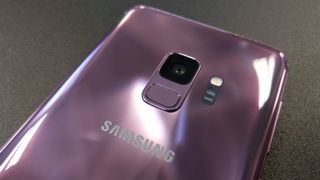
The Samsung Galaxy S9 features a 12MP rear camera with dual-aperture technology.
The rear camera's super slow-motion video capture has also been improved, with the Samsung Galaxy S9 now capable of recording at 960fps at 720p, and 240fps at 1080p (see below video for an example). Neatly, these slow-mo modes now come packing Motion Detection technology, meaning that all the user has to do is hold the phone up to the thing they want to record in slow-motion, with the camera then automatically beginning to record when it sees any motion in the capture field.
We've been very impressed with the quality of slow-motion footage captured on our Samsung S9 review unit, which can be easily turned into a video, gif or even live wallpaper for the phone. We're also impressed with the accuracy and speed of the automatic motion detection, which takes away a lot of the pain of timing things correctly.
It is important to note, though, that for the super slow-mo modes you do need to keep your S9 very still in order for the automatic motion detection to activate. Naturally, the stiller the phone the better the recorded video quality too. We got best results when using super slow-mo by having the phone placed on a solid, flat surface, or resting our shooting arm on a wall or support.
In terms of general shooting with the Samsung Galaxy S9 (some sample images can be seen below) we were impressed with the S9's photo-taking capabilities. The phone's lower or flat-light capabilities in particular stood out (both in on the front and back cameras), as too its raw speed in terms of snapping. The quantity of shooting modes also remains incredibly impressive and the S9's portrait mode, which allows you to take selfies with a blurred background (thereby focusing the shot even more on your beautiful mug), very effective.
We're not sure the S9's shooting system is exactly the "camera reimagined" from a pure photo-taking point of view, but it is a system without equal in many conditions and applications. Auto mode returned surprisingly good results, even though when shooting into light sources we did still get degrees of wash out, while Manual mode offers chance to tweak a myriad of settings if you have the knowledge and skill to do so. And, with the ability to switch between an aperture of f/1.5 and f/2.4, you now have more options than ever to craft great shots.