𝟡𝟘𝟘𝟘 𝕚ℙ𝕙𝕠𝕟𝕖 𝟙𝟙 𝕗𝕠𝕣 𝕗𝕣𝕖𝕖 𝕚𝕟 𝔸𝕦𝕤𝕥𝕣𝕒𝕝𝕚𝕒!🇦🇺𝔻𝕠𝕟'𝕥 𝕞𝕚𝕤𝕤 𝕥𝕙𝕖 𝕠𝕡𝕡𝕠𝕣𝕥𝕦𝕟𝕚𝕥𝕪 𝕥𝕠 𝕓𝕦𝕪 𝕒 𝕤𝕞𝕒𝕣𝕥𝕡𝕙𝕠𝕟𝕖 𝕗𝕠𝕣 𝕗𝕣𝕖𝕖!🔥

We activated all the right settings but making the picture wide after taking it is not something that’s going to be easy to do for most.
(Side note: iOS 13 brings a feature we've been after for a long time: the capability to change the aspect ratio when you're snapping. You can choose square, 16:9 alongside the 4:3 standard image. However no matter the ratio chosen, it's still a 4:3 image on the phone.)
Let’s talk about something that does work well – the low-light performance. Historically Apple’s iPhone cameras have never been great here, but with its improved AI smarts the iPhone 11 is capable of rendering some amazing night snaps.
Whether you’re in a sort-of-dark situation, or focusing a tripod-mounted phone at the night sky, there’s a setting that enables you to make what would normally be a badly-lit photo look as clear as… well not quite as clear as day, but wonderfully bright.
This works by the iPhone 11 automatically telling you to hold the handset steady for 2-5 seconds so that the shutter can stay open for longer; the phone then captures a number of photos at different exposures and sharpness levels, before merging the data to produce the very best photo possible.
If you’ve braced or mounted the phone securely, the capture time can be extended to up to 30 seconds – this is only really necessary if you’re going to be taking photos of the night sky, and for general night shots we saw very little difference between the brightness of photos taken over 5 seconds and 30 seconds.


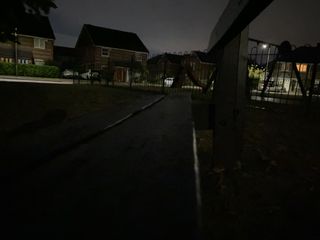
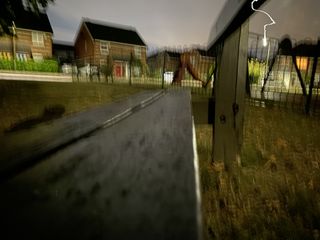
The results are startling, elevating Apple to the level of Huawei, Samsung and Google when it comes to taking low-light and night photos – and in some ways enabling it to surpass its rivals. Night mode can make photos shot at 1am look as if they were taken in late afternoon, and if you can get your subjects to remain still, you’ll take great snaps.
However, try to photograph a scene that includes motion – people dancing at a concert, for instance – and it’s a world of blur. You’ll need to manually turn off night mode, and that’s a little bit of a nuisance when you’re trying to get a quick snap.
Talking of speed, there’s a nice new feature added to iOS 13 whereby pressing and holding on the shutter button will allow you to take a quick video, Instagram-style, instead of burst mode photos (you can still do this by sliding your finger left; if you slide right instead recording will be locked, allowing you to take your finger off the shutter button to adjust exposure and zoom).


Image credit: TechRadar)
 (Image credit: TechRadar)
This is a nice feature that’s going to appeal to those who want to share video clips to social media with ease. You don’t get the same low-light capabilities for video (more on that in a moment), but it’s smooth and defaults to the settings you’ve already set, so you can be shooting high-end 4K footage in a matter of seconds.
We did notice on occasion that the iPhone 11 would show a black screen when we fired up the camera, meaning we would need to flick into another mode (like video or slow-mo) to jolt the viewfinder into showing something. We’ll keep an eye on this, as it’s likely something that will be fixed soon via an update, but it seems like a bug when starting the camera app.
Deep Fusion
There was one feature Apple made a huge deal of at the iPhone launch event, and it could be the thing that propels the iPhone to the head of our list of best camera phones, or at least gets it very close: Deep Fusion.
This feature will take nine photos before you press the shutter button to take a snap, go through the information in each, and then on a pixel-by-pixel basis will decide how best to light and optimize the snap when you do take it. It was called “mad science” on stage – and if it works, we’ll be happy to go along with Apple’s description.
We've yet to properly test this feature on the iPhone 11 as it was only introduced alongside iOS 13.2, but we're planning to include a full look at Deep Fusion in the review once we've had time to test it.
Portrait mode
With the addition of the second camera, Apple has made Portrait mode on the iPhone 11 far better than it was on last year’s iPhone XR – where last year software was used to help the iPhone know which was foreground and which was background, the extra sensor gives more physical information to help.
It's not perfect – where a scene is divided into foreground subject and background, it sometimes leaves some blur around the object that’s supposed to be in focus (especially with hair) but it can take some decent snaps.
 (Image credit: TechRadar)
New to the Portrait mode effects in iOS 13 is High Key Mono, joining the Stage Light and Stage Light Mono options – at times it looks arty and professional, but if that foreground image isn't captured precisely, it looks a bit poor.
Movie recording
Apple is making a lot of noise about how the iPhone 11 can shoot 4K footage at 60 frames per second (fps), and it's got good reason to: having such a feature on a phone at this price is going to be attractive to a lot of people.
Shooting at 60fps will bring a certain fluidity to the shot, although some might not enjoy the effect as it doesn't look like the footage you’re used to seeing on TV.
We also noticed a definite improvement in exposure and contrast, even over the iPhone XS from last year, with more definition and detail in the shadowy areas.
The new iPhone 11 is a tool that those with some video-editing capability will be able to do a lot with; being able to tweak the filter effects, color balance and so on in the native Photos app is cool too, before you export to iMovie. It's not quite as advanced as other phones on the market in this regard, but it balances power and usability well, and is a worthwhile reason to buy if you're into quick video capture