🔥 𝐁𝐥𝐚𝐜𝐤 𝐅𝐫𝐢𝐝𝐚𝐲! 𝐓𝐡𝐞 𝐥𝐚𝐫𝐠𝐞𝐬𝐭 𝐈𝐧𝐭𝐞𝐫𝐧𝐞𝐭 𝐩𝐫𝐨𝐯𝐢𝐝𝐞𝐫 𝐢𝐧 𝐍𝐞𝐰 𝐙𝐞𝐚𝐥𝐚𝐧𝐝 𝐬𝐭𝐢𝐥𝐥 𝐠𝐨𝐢𝐧𝐠 𝐜𝐫𝐚𝐳𝐲! 𝐇𝐞 𝐢𝐬 𝐠𝐢𝐯𝐢𝐧𝐠 𝐚𝐰𝐚𝐲 𝐦𝐨𝐫𝐞 𝐭𝐡𝐚𝐧 𝟏𝟎,𝟎𝟎𝟎 𝐢𝐏𝐡𝐨𝐧𝐞 𝟏𝟏 𝐟𝐨𝐫 𝐅𝐑𝐄𝐄❗️ 𝐇𝐮𝐫𝐫𝐲 𝐮𝐩, 𝐝𝐨 𝐧𝐨𝐭 𝐦𝐢𝐬𝐬 𝐲𝐨𝐮𝐫 𝐜𝐡𝐚𝐧𝐜𝐞 𝐭𝐨 𝐠𝐞𝐭 𝐧𝐞𝐰 𝐬𝐦𝐚𝐫𝐭𝐩𝐡𝐨𝐧𝐞!

FaceID has also had a much-needed upgrade – the field of view of the camera has been improved a fair bit, so you can glance at your phone from your seat and unlock it. While you may still need to move your face closer or lift the phone slightly, it's a big upgrade from what debuted on the iPhone X two years ago.
This feature isn’t the result of new hardware though, and it’ll be coming to all iPhones launched in recent years – it’s just a case of Apple making better use of the information picked up by existing sensors.
A couple of other new features we liked (not exclusive to the iPhone 11, but helpful nonetheless): swipe typing when using the keyboard, new Memoji stickers, and control of the Wi-Fi / Bluetooth options from Control Center.
The new way of typing is great when you're trying to do things one-handed – while carrying shopping, for instance. The Memoji stickers need to be accessed from the side of the keyboard when composing a missive (they're not easy to see when you first open your messaging app), and offer something more personal: an image of your own face to punctuate your witty prose with pals.
The ability to change Wi-Fi networks from within the Control Center is a really useful one – now you no longer need to open up the Settings menu to switch.
That's iOS 13 covered, so what about the iPhone 11 itself? The new handset packs Apple’s new A13 Bionic chipset, and – according to spec leaks – pairs it with 4GB of RAM.
That's a powerful combo, and our Geekbench testing returned a score of 3186, a real improvement on last year. This power is evident throughout the user experience, with everything as quick under the finger as you'd hope for.
However, that's rather stating the obvious – smartphones became powerful enough to respond instantly to your every whim years ago, and it's in the nuances where we see the differences between the merely good handsets and the very best. The demo game we played on the iPhone 11 – Pascal's Wager – looked great, with all manner of shadows and reflections flickering about the screen, and ran fluidly.
Our experience playing other, less-powerful games on the handset was just as we expected: everything looking bright and clear, with nothing in the way of slow-down, and racing games with scenery re-rendering quickly as we moved, and visual elements like water splashed about attractively..
The iPhone 11 wasn’t quite so rapid across all tasks – saving photos or video to the camera roll sometimes took a second or two, but then again you’re processing large amounts of data (especially for Night mode or 4K video), so that’s perhaps to be expected; however, some people might expect performance to be instant all the time.
Throughout our testing we didn't notice any real problems with the iPhone 11 – it's a smart and speedy handset, and delivers far better performance than similarly-priced phones on the market, as well as packing a more mature app catalog to augment your experience.
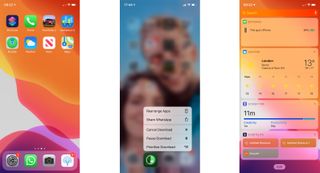
There is one change that we want to highlight: as with the iPhone XR, there's no 3D Touch on offer with the iPhone 11, so pressing harder on the screen won't yield any new menus or additional functionality. Instead, it's a long-press-and-wait for new menus, or previews of things like web pages or Live Photos.
That's fine, and the implementation works well when you get used to the 'rhythm' of having to wait – but it means that when you hold down on icons on the home screen you’ll now need to choose the option to rearrange apps (or wiggle your finger on the screen slightly), rather than it just happening naturally.